Renting Out Your Driveway in the UK: Fees, Tax and Whether It’s Worth It
This post contains Amazon affiliate links. If you buy through them, Found It First may earn a small commission at no extra cost to you.
If your driveway sits empty while you’re at work, or you’ve got a space you never use, someone nearby might pay to park on it. It’s one of the lowest-effort side hustles there is: no stock, no customers at the door, no skills to learn. But it isn’t for every street, and there are a few checks worth doing first. Here’s the honest picture.
How it works
You list your space on a parking app, set a price and the times it’s free, and drivers book and pay through the app. The two big UK names are:
- JustPark: justpark.com
- YourParkingSpace: yourparkingspace.co.uk
Both let you list for free and handle payments, so you never have to chase anyone for money.
What the apps take
This is where people often get caught out, so here are the platforms’ own figures:
- JustPark says listing is free and it takes a 3% fee per booking, deducted from your earnings (JustPark Help Centre).
- YourParkingSpace says it charges space owners no commission. Instead, drivers pay your price plus a 20% uplift, and a 3% payment-processing fee comes off your earnings (YourParkingSpace support).
Fee structures change, so check the current terms before you list. Watch the YourParkingSpace uplift in particular: drivers see a higher price than you set, which matters if nearby spaces are competing on price.
So what can you earn?
I’m not going to quote you a magic monthly figure, because it depends almost entirely on where you are. Any earnings figure you see online is someone else’s driveway. A space round the corner from a busy station, football ground, hospital, airport or city centre can book regularly. A driveway on a quiet cul-de-sac with free street parking will probably sit there.
The quickest honest test:
- Open both apps and search for parking at your own postcode.
- Look at what nearby spaces charge and how many there are.
- Check what the council car park or on-street parking nearby costs. That’s your real competition.
If spaces near you are scarce and parking is pricey, it’s worth a go. If there’s free parking everywhere, don’t bother.
Ways to make it more bookable
- Offer monthly or weekday lets to commuters. That’s steady income with fewer handovers.
- Write clear access instructions and add a photo taken from the road.
- Price slightly under the council car park, not just under other driveways.
- Block out the times you need it, so nobody turns up while your car is there.
The tax bit: the £1,000 property allowance
Renting out a parking space counts as income from property. That means the property allowance applies, not the trading allowance:
- Up to £1,000 gross a tax year: tax-free, and you usually don’t need to tell HMRC.
- £1,000 to £2,500: contact HMRC.
- Over £2,500: register for Self Assessment.
All of that comes from GOV.UK’s tax-free allowances guidance. Above £1,000, you can deduct either the £1,000 allowance or your actual expenses, but not both.
Two more things worth knowing:
- The 30-sales reporting exception for platforms doesn’t apply to property rentals, so parking apps can report your earnings to HMRC whatever the amount (GOV.UK). As always, being reported doesn’t automatically mean you owe tax.
- This is separate from the £1,000 trading allowance. If you also do a selling side hustle, the two allowances sit side by side. More in our side hustle tax explainer.
Check these before you list
Your mortgage, lease or tenancy
If you rent, your tenancy agreement may not allow subletting any part of the property, and that includes a parking space. If you own a leasehold flat, the lease or the management company may have rules about it. Leaseholds and some new-build estates often have covenants. Read the paperwork or ask.
Your home insurance
Tell your insurer. Strangers regularly parking on your land is the kind of change policies can care about. Many people find it makes no difference, but it’s a two-minute call that avoids a refused claim later.
Your neighbours
Shared driveways and narrow streets cause arguments. If access is shared, talk to the neighbour first.
Planning and business rates
For an ordinary home driveway let to the odd commuter, this rarely comes up. If you’re turning a big plot into a mini car park, check with your local council first.
Handy extras
None of these are essential, but owners often add:
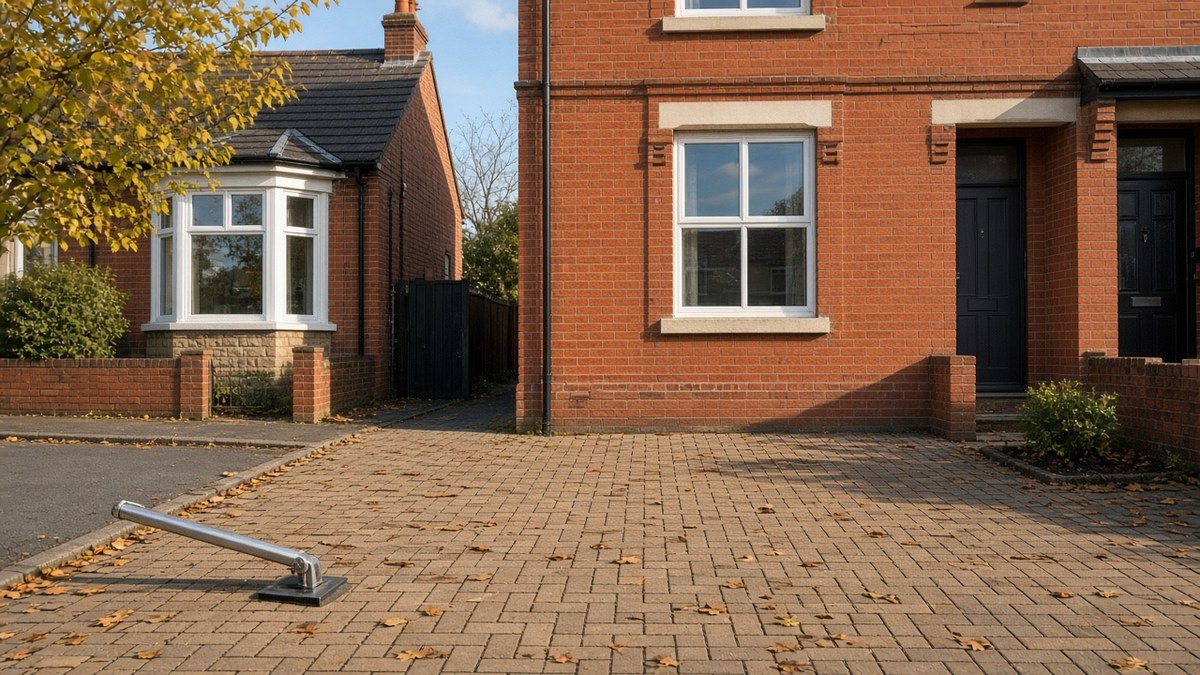
- A folding parking post or bollard (see folding parking posts on Amazon) so the space is free when you need it and you’re not blocked in.
- A small weatherproof sign (see parking signs on Amazon) with your space number, so drivers know they’re in the right place.
- A doorbell or driveway camera (see video doorbells on Amazon) for peace of mind. Be sensible about pointing it at your own property only.
Told straight
Renting out a driveway won’t replace a wage, and anyone saying it will is selling something. But if you live somewhere parking is tight and your space is empty most of the day, it’s close to free money for very little effort. Check your paperwork, search your postcode on both apps, and let the local demand tell you whether it’s worth it.
Fees and tax figures checked in October 2026 against the platforms’ help pages and GOV.UK. Check the links for current terms.

One Comment